




Myth busting
The Imerys British Lithium project, lithium batteries, and electric mobility raise many questions—often accompanied by common misconceptions. What are the facts behind the cliches?
Myth n°6
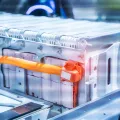
Electric vehicle batteries are wasteful and can't be recycled
Fact: Developments in battery component extraction mean processing centres can extract 98% of battery materials for recycling or reuse.
You may have heard another EV myth that electric vehicle batteries either can’t be recycled or are challenging to recycle and ultimately end up in landfill. This simply isn’t true.
Tesla anticipates that EV batteries will be good for 200,000 miles driving.
Average car life in the UK is 15 years before it's scrapped, and so the existing fleet of EVs will be on the road for a long time before requiring recycling.
Electric vehicle batteries can be recycled at processing centres when a vehicle is finally scrapped. Some companies can even remove your electric vehicle battery and repurpose it for energy storage. If you have solar panels, an electric vehicle battery can be repurposed to store the electricity they generate, helping keep your electricity costs down. Now, that’s what we call resourceful.
Electric vehicle batteries that aren’t repurposed are now shipped to EU processing centres. This is a short-term solution as the UK Government is working with partners to set up a sustainable battery recycling chain in the UK.
Are you curious to find out more about EV batteries and their lifecycle? Read this blog on electric vehicle batteries.
The UK Government will end the sale of new petrol, diesel and hybrid cars and vans from 2035. Take the time now to get ahead and go electric.
Myth n°5
The grid can’t support an increase in electric vehicle charging
Fact: Estimates show that if we all switched our petrol or diesel vehicles to electric overnight, we would experience only a 10% increase in national electricity demand.
Can the energy grid support more charging? The answer is yes!
You may be surprised, but peak electricity demand in the UK has fallen 16% over the past 18 years, according to National Grid statistics. Our phones, computers, lighting and washing machines have become increasingly energy efficient, reducing demand on the grid. The change from incandescent to LED lights in our homes and businesses has also reduced energy consumption.
As the number of electric vehicles on the roads continues to grow, demand for electricity will also increase. Of course, making the shift overnight would be challenging, however the growth in EVs will happen over a number of years, allowing National Grid to understand charging patterns and to plan ahead.
Myth n°4
Home charging points aren’t worth the investment
Fact: You can save money in the long run by installing a home charge point.
It’s true that there are upfront costs to install a home charger (the average cost of installing electric car charger prices range from £1,000 – £1,200). However, you can expect to save money over time due to the lower cost of electricity compared to petrol or diesel.
Recharging your EV at home will normally result in the greatest cost savings, as your domestic electricity tariff is much lower than the cost of power at public stations.
It also means your car is fully charged every morning.
You may be able to save more money by charging overnight with an off-peak overnight electricity tariff. Learn more about the different charging options for EVs.
There’s also financial support available, which can help to keep the cost down. People living in Scotland May be eligible to apply for the domestic charge point grant scheme. Another scheme, the Office for Zero Emission Vehicles’ EV chargepoint grant, offers renters or flat owners with off-street parking either £350 or 75% off the cost of installing a home charge point.
Myth n°3
There aren’t enough public charge points
Fact: You can find over 53,000 electric vehicle charging points across the UK, a 46% increase on a year ago.
Charge points may be less noticeable than petrol stations, but the UK is now home to a well-connected public charge point network.
The UK Government is committed to rapidly increasing access to public chargers.
For those with off street parking, it is easy to charge your EV at home, so everyday you can have a full tank!
According to Zapmap quarterly statistics, the number of ultra-rapid charge points in the UK has increased by 68% since September 2022. What’s more, Zapmap’s calculations show that the UK is likely to reach 100,000 charging devices as early as August 2025. Planning your journey and checking where your closest charge points are is a good idea if you’re going on a long drive. Use a charge point map like Zap-Map or Charge Place Scotland to check availability and avoid waiting times.
Myth n°2
Electric vehicles aren’t suited to long journeys
Fact: Pure electric vehicles have an average range of 250 miles, with many models able to go further on a single charge.
It’s also worth noting that 68% of journeys we make yearly are under five miles. But if you want to travel further – you can.
The government is committed to continue rolling out charging points, to facilitate the transition to electric mobility.
Still concerned you’ll run out of battery? There are plenty of efficient driving tips to help you squeeze more miles out of a charge:
- Anticipate the road ahead to ease off your brakes and make the most of regenerative braking, recharging your battery as you slow down
- Avoid unnecessary high speeds – take it steady and drive the speed limit
- Don’t weigh the car down – we’ve all been guilty of unnecessarily lugging items around in the boot
Myth n°1
Electric vehicles emit as much carbon dioxide as petrol or diesel vehicles
Fact: EVs emit zero emissions on the road, and the energy to power them is only getting greener.
Pure EVs run on electricity. This means that, unlike petrol and diesel cars, they emit zero tailpipe emissions. While it’s true that there are CO2 emissions associated with electricity generation to charge EVs, these overall emissions are far lower.
Emissions also depend on how the electricity is generated. So EVs running on electricity from renewable sources will have even lower emissions.
Still need convincing? In 2022, the UK saw a 6% increase in renewable electricity. We expect to see the amount of renewable-generated electricity increase in future, meaning electric vehicles will continue to become less carbon intensive.
Any additional emissions from manufacturing EVs are quickly negated by reduction on the road.
An independent environmental assessment has shown Imerys British Lithium to be one of the world's cleanest, low-carbon lithium producers.